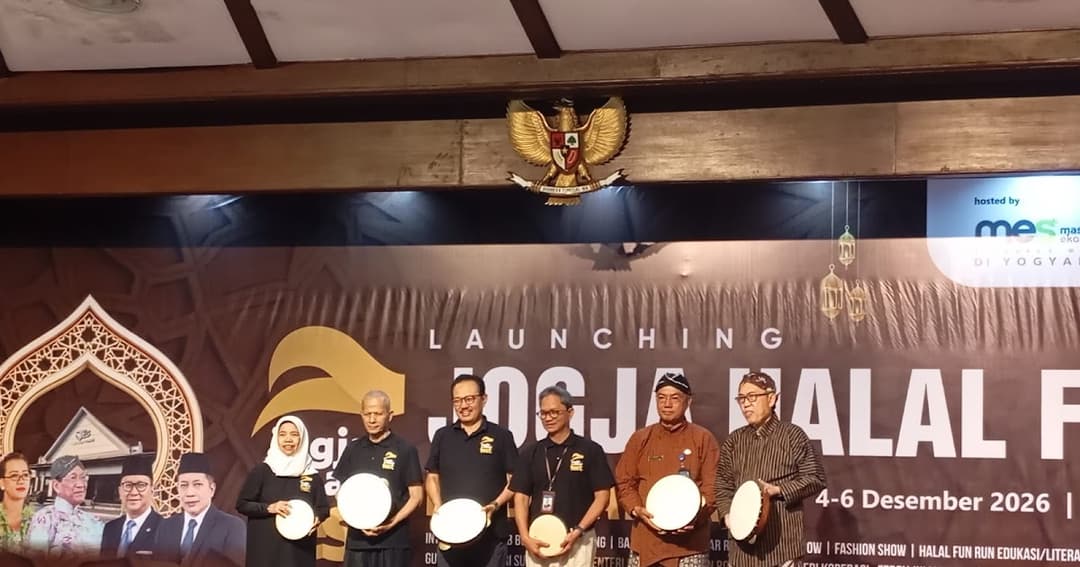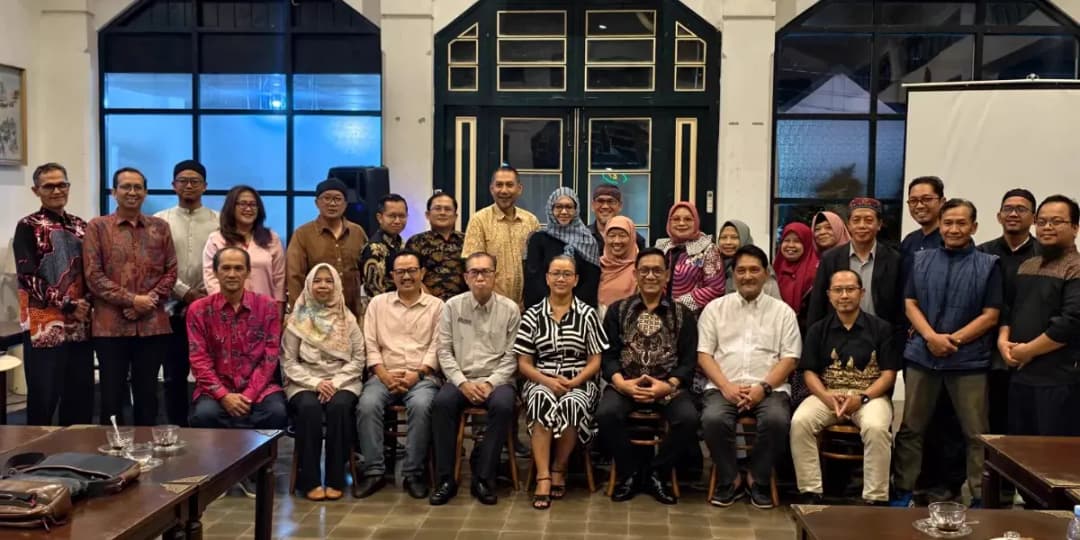
Yogyakarta, 28 September 2026 — Strengthening the halal economic ecosystem and empowering the community's economy was one of the concerns in the Focus Group Discussion (FGD) of the Global Mutual Cooperation (G2R) Tetrapreneur Halal Ecosystem Network — SNI 9445:2026 Mutual Cooperation Entrepreneurial Ecosystem, which was held on Monday (28/9) in the Meeting Room of the Provincial National Unity and Political Agency Daerah Istimewa Yogyakarta (DIY). This activity is part of a series of assistance to sub-districts/villages assisted by the DIY Community Empowerment, Subdistrict, Population and Civil Registration Service (DPMKKPS). Apart from that, this activity is one of a series of International Road to Jogja Halal Fest (JHF #3) which will be held on 4–6 December 2026 at Jogja Expo Center (JEC), Yogyakarta, and is being held for the first time on an international scale. JHF #3 is a friendly collaboration with the DIY Sharia Economic Community (MES) and KADIN DIY as joint organizers. JHF #3 this time led by Dr. Ir. Ahmad Syauqi Soeratno, M.M. as Chairman of SC together with Deputy Chairman of SC Budiharto Setyawan; and Drs. Heroe Poerwadi, M.A. as Chair of OC together with Deputy Chair of OC Rika Fatimah P.L., S.E., M.Sc., Ph.D. The Advisory Board is led by GKR Mangkubumi, General Chair Daerah Istimewa Yogyakarta0]], and Prof. Dr. Edy Suandi Hamid, M.Ec., General Chair Daerah Istimewa Yogyakarta1]].
The event was opened by Setyo Warjiyana, S.IP., M.A.P. as Community Self-Help Activator and also representing DPMKKPS DIY, who said that DIY has great potential in developing the community's economy, including through MSMEs, communities and the halal ecosystem. However, this potential needs to be strengthened through a business ecosystem that not only improves product quality, but also builds quality market networks, both offline and online, so that business actors do not move independently. G2R Tetrapreneur is a momentum to translate the spirit of mutual cooperation into an entrepreneurial ecosystem that connects business actors, supply chains, quality, brands, and market access in an integrated manner, so that local products can grow together, have the power of collaboration, and reach a wider market without losing Indonesia's identity.
Present as resource persons at this activity were Rika Fatimah P.L., S.T., M.Sc., Ph.D., Deputy Chair of OC JHF #3, Chair of the Halal Industry Department (DIH) MES DIY; Founder, Conceptor and Expert of G2R Tetrapreneur; Senior Lecturer at the Faculty of Economics and Business, Gadjah Mada University (UGM); as well as Deputy Chair of Technical Committee 03-13 for SNI G2R Tetrapreneur, highlighting the importance of building an economic ecosystem that is able to answer various development challenges in Yogyakarta. According to Rika, various social and economic problems, including inequality and poverty, need to become momentum to strengthen more structured and sustainable community empowerment practices.
On the other hand, Yogyakarta has great potential in developing sharia economics. This is reflected, among other things, in the achievements at Adinata Syariah 2026, with awards in a number of categories, including Sharia Economic Pioneer School, Zakat, Infaq and Alms (ZIS), Sharia Business Incubation, Sharia Economic and Financial Innovation, and Growth of Halal Certified Business Actors. Rika emphasized that these achievements need to be a momentum to evaluate and increase the real impact of sharia economic development in society. "Don't let this award just be a performance. How come there are still so many poor people who are sharia," said Rika.
According to Rika, strengthening the community's economy also requires the involvement of social organizations (ormas) in a more professional manner. Mass organizations have great potential to become drivers of community empowerment because they have a broad community base. If these strengths can be collaborated with the right economic empowerment approach, the impact can create a multiplier effect for society. In this context, SNI 9445:2026 — Mutual Cooperation Entrepreneurial Ecosystem or SNI G2R Tetrapreneur can be an approach to building a collective business ecosystem, not just encouraging business actors to "class up" individually.
Rika also explained lessons learned from developing halal ecosystems in other countries, one of which is Malaysia through the Halal Development Corporation (HDC). HDC plays a role in education, training, competency development and strengthening the halal industry which has national and international recognition. This practice shows the importance of managing a halal ecosystem that involves experts and professionals in their fields, and is supported by structured business processes to maintain quality and meet standards.
Rika emphasized again that SNI 9445:2026 is here to translate the value of mutual cooperation into a real economic mechanism that can be implemented by society, including MSMEs. SNI G2R Tetrapreneur uses a comprehensive approach that includes ideas, planning and execution of business activities, including product standardization, promotion and distribution, with an ecosystem perspective as a single unit. Through this approach, business actors are no longer positioned as entities that operate independently, but as part of a business network that is connected and strengthens each other. "The presence of SNI G2R Tetrapreneur provides enthusiasm and certainty in building institutions and business ecosystems together. This approach is one of the efforts to translate the value of mutual cooperation into economic practice and realize the Pancasila Economy which is based on divinity, humanity, unity, people and social justice," explained Rika.
Furthermore, SNI G2R Tetrapreneur encourages business actors to produce products and carry out business processes that meet global quality demands without abandoning national identity. Mutual cooperation is the main force in building quality, markets, business chains and brands together. In the future, one of the visions for the development of SNI G2R Tetrapreneur is towards alignment with the ISO 9000 quality management series, so that entrepreneurial practices based on Pancasila Economics are expected to have wider acceptance in the global market while at the same time introducing an authentic Indonesian entrepreneurial approach to the world community.
SNI 9445:2026 is not just positioned as a program, but as a framework for strengthening the mutual cooperation-based entrepreneurial ecosystem that prioritizes reliability, quality, collaboration and Indonesian identity. This approach is expected to strengthen the role of MSMEs as well as open up space for collaboration between government, academics, the business world, community organizations, communities and society in building an inclusive, competitive and sustainable economic ecosystem.
The presentation was continued with a presentation on Business Matching delivered by Raden Hari Haryadi Basuki as Coordinator of Business Matching and International Program Team Jogja Halal Fest #3. On this occasion, Hari conveyed the concept of business matching which is aimed at becoming a platform that brings together sellers, buyers, investors and strategic partners in various halal economic sectors. Business meetings do not stop at the process of bringing the parties together, but result in a Letter of Intent (LoI), Memorandum of Understanding (MoU), as well as trade and investment transactions.
Those present at this activity included H. Edwin Ismedi Himna as Deputy Chair of Division 1 of the PPM Tourism and Creative Economy Institute (LPEK); Drs. Jumarodin as representative of the Chairman of PINBAS MUI DIY, LP UMKM PWM DIY, and Chairman of the Independent Press Council of the Digital Press Institute Pilar Data Indonesia DIY; April Suryono, S.T. as daily administrator at the PDM City Economic and Tourism Business Council (MEBP) Yogyakarta; as well as G2R Tetrapreneur activists from the DIY G2RT Association; DIY Culinary Community assisted by the Ministry of Cooperatives and SMEs (G2RT KmK4); Community Farmer Women's Group assisted by BI KPw DIY (KmKWT1); G2R Tetrapreneur Unit for sub-districts/villages and sub-districts in DIY; as well as students from the UGM Islamic Economics and Halal Industry Postgraduate School.