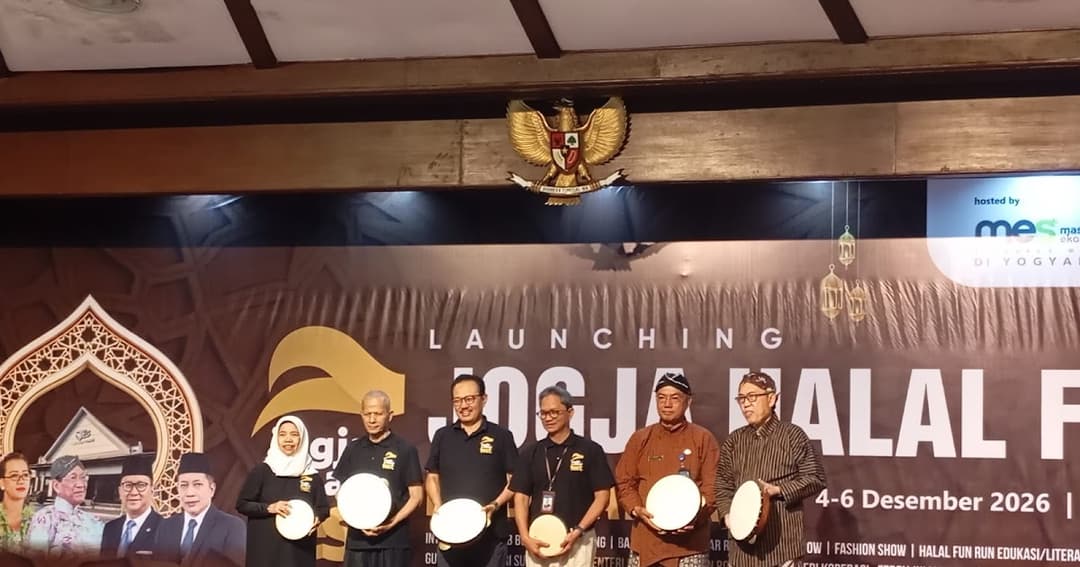
Yogyakarta, 2 September 2026, Jogja Halal Fest (JHF) #3 International continues to finalize the implementation concept by strengthening the business matching scheme as one of the main agendas of the halal festival which will take place on 4–6 December 2026 at Jogja Expo Center (JEC), Yogyakarta.
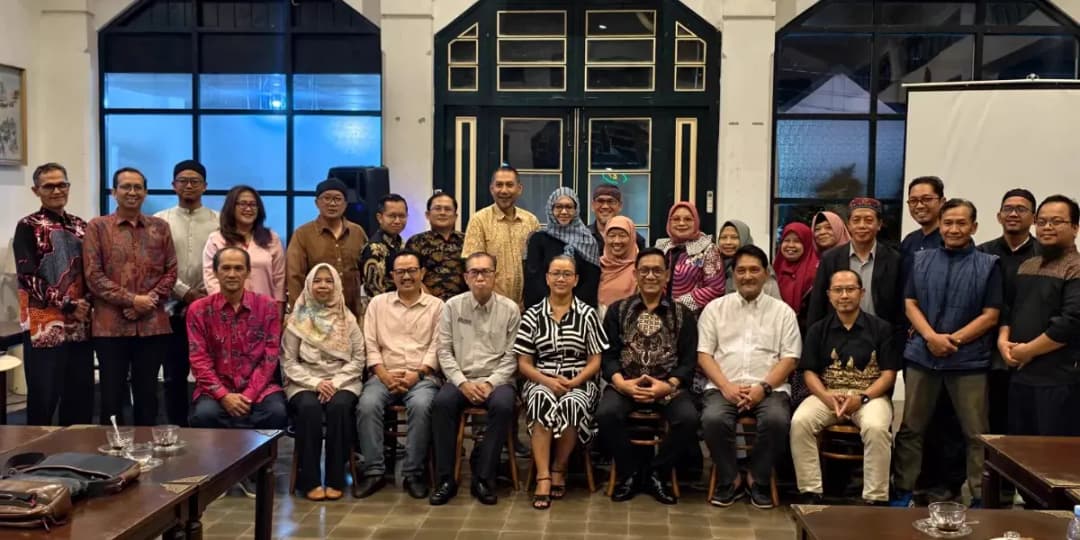
Strengthening this concept was discussed at the International Business Matching Coordination Meeting JHF #3 which was held on Wednesday (2/9) at the DIY DPD Office. The meeting brought together the organizing committee together with a number of Regional Apparatus (OPD) Daerah Istimewa Yogyakarta and strategic partners to ensure the involvement of business actors, buyers, investors, as well as national and international business networks.
Chairman of the Organizing Committee (OC) JHF #3 International, Heroe Poerwadi, said that the holding of JHF #3 brought a new direction compared to the previous two holdings.
"JHF #1 and #2 are more about building a sharia economic ecosystem in DIY. In JHF #3, we want to expand it by providing business matching, so that business actors not only meet consumers, but also meet buyers, investors and fellow business actors, both from within and outside the country," he said.
The business matching concept is aimed at becoming a platform that brings together sellers, buyers, investors and strategic partners in various halal economic sectors. Business meetings do not stop at the process of bringing the parties together, but are directed towards producing a Letter of Intent (LoI), Memorandum of Understanding (MoU), as well as trade and investment transactions.
In the plan presented by Hari Haryadi and Rika Fatimah as coordinators of the Business Matching Committee, JHF #3 will develop a number of matching desks, including Investment Matching Desk, Halal SME/Product Matching Desk, Export Rate Desk, Halal Tourism Matching Desk, Halal Ecosystem and Finance Desk, and Empowerment Collaboration Matching Desk.
Business matching will be carried out through the stages of mapping and business profiling of MSMEs, identifying the needs of buyers and investors, matching processes, business meetings, and monitoring and follow-up on transactions.
Target 150–200 MSMEs and International Buyers
In its implementation, JHF #3 targets the involvement of around 150–200 companies and MSMEs as sellers, around 50 national buyers, and around 20 international buyers or partners.
International networks will be strengthened through collaboration with various parties, including the Indonesian Export Entrepreneurs Association (GPEI) DIY, KADIN DIY, OPD, as well as partner networks in a number of countries.
A number of countries that are targets for exploration include Malaysia, Thailand, Türkiye, Japan, China and other ASEAN countries.
From this series of business matching, the committee is targeting the formation of various business agreements with a potential transaction value that is expected to reach IDR 100 billion.
Chairman of the Steering Committee (SC) JHF #3 International, Ahmad Syauqi Soeratno, who attended the online meeting from Jakarta, emphasized that JHF development needs to be directed at a regional and international scale.
According to him, the development of halal festivals in Malaysia, Thailand and Singapore shows that there is an opportunity for Yogyakarta to take a bigger role in developing the halal economic ecosystem.
He also emphasized the importance of building JHF's sustainability vision so that the festival is not seen as a one-time activity, but as part of a long-term halal economic development agenda in Yogyakarta.
OPD is Actively Encouraged to Identify Potential MSMEs
The coordination meeting also provides momentum to synergize the role of regional governments in preparing business actors who will enter the business matching scheme.
The DIY Cooperatives and SMEs Service stated its readiness to help identify and curate MSMEs that have the potential to enter the export market. Meanwhile, the DIY Industry and Trade Service will support export and foreign trade aspects.
The City Department of Industry, Cooperatives and SMEs Yogyakarta also provides support by providing space for start-ups.
The Sleman Regency Industry and Trade Service emphasized the importance of preparing a buyer needs matrix which contains information regarding product types, production capacity and market requirements. This matrix is needed so that the process of proposing coached MSMEs by each OPD can be carried out in a more targeted manner.
In line with this, the committee will map the potential of MSMEs in seven sharia economic sectors which have the opportunity to be developed into national and international markets.
One of the potentials highlighted is fried onion products which are in demand in the European market as a complementary food ingredient. However, some business actors still face limited production capacity and therefore require strengthening and collaboration to be able to meet the needs of the export market.
Push Investment Project Ready to Offer
Support for incoming investment is also one of the focuses of JHF #3. The DIY Investment Project Ready to Offer (I-PRO) Investment Project Ready to Offer (I-PRO) Investment Project Document as an investment information package ready to be offered to potential investors.
DPMPTSP DIY also opens up opportunities to help connect the committee with its international networks, including networks in Thailand, Australia, New Zealand, as well as the Muhammadiyah community in Thailand.
To reach the Chinese market, the committee is also encouraged to use promotional materials in Mandarin, including involving students from China studying at universities in Yogyakarta.
Apart from investment and export aspects, DPMPTSP DIY proposes a business licensing service booth, especially Business Identification Number (NIB) services, in the JHF #3 area. It is hoped that this facility can help MSMEs legalize their businesses while encouraging them to move up in class.
Strengthening the Halal Ecosystem and the Concept of Mutual Cooperation
JHF #3 also opens up space for a collaborative approach through the concept of mutual cooperation proposed by the DIY Tri Partner Global Mutual Cooperation Association.
This approach is directed at helping MSMEs that are not yet able to meet export standards and capacity individually, but have potential if consolidated through a collective business scheme.
The concept of mutual cooperation is also considered to have distinctive value because it highlights Indonesia's social and cultural character in building economic cooperation. This idea will then be studied so that it can be accommodated in the form of a special pavilion or display case at JHF #3.
On the other hand, the meeting also highlighted the importance of strengthening halal and thayyib aspects, especially for the food and culinary sectors. Halal certification is considered necessary to go hand in hand with aspects of product hygiene and sanitation.
For this reason, there is a proposal to involve the Health Service in strengthening sanitation aspects and encouraging culinary businesses to meet hygiene standards, including the Sanitation Hygiene Certificate (SLHS).
Strengthening the concept of halal thayyiban is also one of the ideas that can be developed in the implementation of JHF in the future.
Towards a Sustainable JHF
Through this coordination meeting, the committee together with OPD and strategic partners agreed on a number of further steps, starting from mapping and curating potential export MSMEs, identifying national and international buyers, preparing a business matching needs matrix, preparing I-PRO, to strengthening coordination with the tourism, health, trade, investment and sharia economic sectors.
The Economic Bureau of the DIY Regional Secretariat as the Secretariat of the DIY Regional Sharia Economic and Financial Committee (KDEKS) also expressed support for the implementation of JHF #3, including communication facilitation with the DIY Regional Government, publication support through regional government media, as well as coordination with the Ministry of Religion and the Halal Product Guarantee Organizing Agency (BPJPH).
By strengthening cross-sector collaboration, JHF #3 International is expected to not only become a place to promote halal products, but develop into a business platform capable of bringing together Yogyakarta business potential with international markets, investments and networks.
Jogja Halal Fest #3 International will be held on 4–6 December 2026 at Jogja Expo Center (JEC) carrying the spirit of collaboration to strengthen the halal ecosystem Yogyakarta towards national and global markets.